
How to Choose a Golf Launch Monitor for Your Space
Last Updated: November 22, 2026
Quick Summary
To choose a golf launch monitor, first measure your space and define your goals, then compare radar and camera tracking, confirm which metrics are measured directly, and total the full cost of ownership. Confirm simulator and software compatibility before buying.
- Measure ceiling height, tee-to-wall depth, and swing width before comparing models.
- Radar units generally work well in tighter spaces, while camera units need more clear space and consistent lighting.
- Confirm which metrics the device measures directly and which it estimates from ball flight.
- Add the device, software subscription, hitting mat, and computer to get the true multi-year cost.
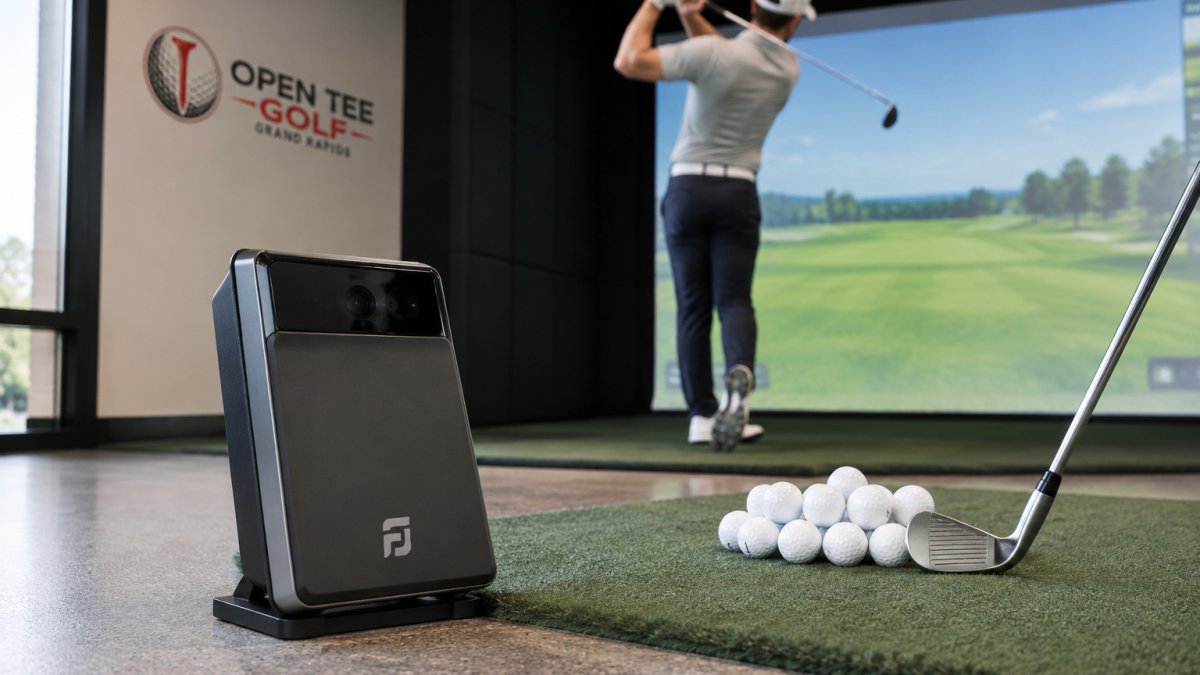
- Test the setup in a private bay at Open Tee Golf before committing to home equipment.
Table of Contents
- Start With Your Space and Practice Goals
- Radar vs Camera Golf Launch Monitor: Which Tracking Method Fits You
- Golf Launch Monitor Data Explained: What the Numbers Tell You
- Comparing Launch Monitor Categories by Budget and Use Case
- Best Golf Launch Monitor for Indoor Use and Simulator Compatibility
- Golf Simulator Launch Monitor Compatibility and Software Checks
- Why Testing a Launch Monitor at Open Tee Golf Beats a Home Setup
- Frequently Asked Questions
Start With Your Space and Practice Goals
Buying a golf launch monitor starts with two questions: where will you hit, and what do you want to improve? A device that suits a dedicated garage bay can be a poor fit for a spare bedroom. Measure the space before you compare models.
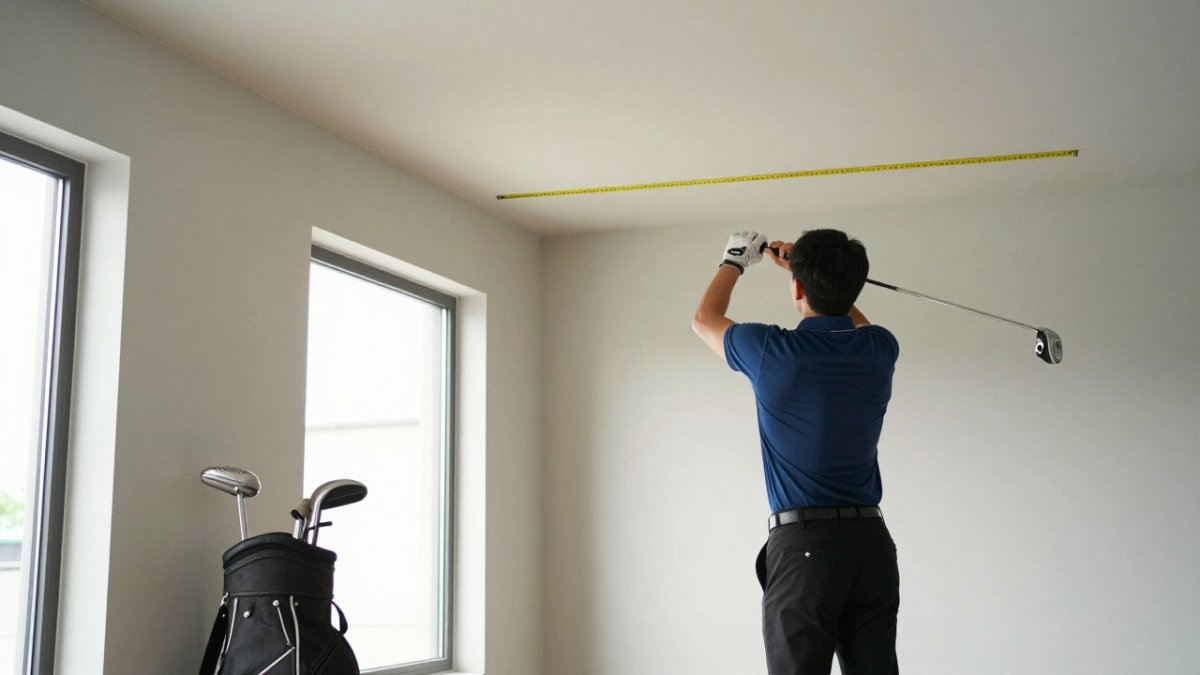
Check your ceiling height, the depth from the tee to the back wall, and the width you need for a full swing with your longest club. Most launch monitors also need room behind you for the device itself, so measure that too.
Your goals matter as much as your room. A golfer working on putting, short game, or swing path needs different data than one tracking carry distance for course planning. Write down the two or three numbers you want to watch most.
Open Tee Golf's private bays are built around full swing tracking, so you do not need to fit a launch monitor into a spare room to get useful data. The club is open 24/7 for members, which gives you a practical comparison point before you spend money on home equipment.
Radar vs Camera Golf Launch Monitor: Which Tracking Method Fits You
Radar and camera systems read the same shot in different ways, and each has trade-offs. Radar-based units track ball speed and launch angle from the device's position, and they generally work well in tighter spaces. Camera-based units capture images of the ball and club, which can be useful for reading club-face data but may need more clear space and consistent lighting.
Radar is often the simpler choice for home use. It tends to handle a range of hitting areas without much setup, though placement still affects accuracy. Camera systems can suit golfers who want detailed club data and have room to position the unit correctly.
Read the spec sheet carefully. Confirm which metrics the device measures directly and which it estimates. Ask whether it works indoors, whether it needs a mat or a netted hitting area, and whether the software works with the simulation platform you plan to use.
Golf Launch Monitor Data Explained: What the Numbers Tell You
Launch monitors report a set of numbers after each shot, and the value of a device depends on which numbers it measures directly versus which it estimates. The most common ball metrics are ball speed (mph), launch angle (degrees), spin rate (rpm), carry distance (yards), and total distance (yards). Club metrics add clubhead speed (mph), smash factor, club path (degrees), face angle (degrees), and angle of attack (degrees).
Smash factor is ball speed divided by clubhead speed. It shows how efficiently you transfer energy to the ball. A driver smash factor around 1.45 to 1.50 is a common target for better players, while a 7-iron typically sits closer to 1.30 to 1.35. Launch angle and spin rate together shape how far and how high the ball flies; Use these numbers to spot patterns, such as a consistently low launch with a driver, rather than chasing one good shot.
Shot dispersion matters too. A single shot tells you little; a group of ten shots shows your typical miss pattern and consistency. Record the average and the spread, not just the best ball. Good data helps you practise with purpose.
Watch out: a device that estimates club data from ball flight can report plausible-looking numbers that drift session to session, so confirm which metrics are measured and which are calculated before you build a practice plan around them.
At Open Tee Golf, members train on Full Swing simulators in fully private bays, so the ball and club data you see is measured in a controlled indoor environment rather than inferred from a tight home setup. That gives you a reliable baseline for the numbers above before you decide which metrics matter most to you.
Comparing Launch Monitor Categories by Budget and Use Case
Launch monitors fall into rough categories based on price and purpose, and the smartest way to compare them is to estimate total ownership cost over time rather than the sticker price alone. The fuller picture includes software subscriptions, a compatible device, a hitting mat, a net or screen, and any accessories.
Entry-level devices suit occasional practice and basic ball data. They are easier to set up but may offer fewer metrics and less consistency in difficult conditions. Mid-range units add more club data and better software support.
Build a realistic setup budget by adding four lines: the device, the software (many platforms charge an annual subscription), the hitting mat and net or screen, and the device you will run the software on. Price the whole package before you commit, since accessories and subscriptions can add up over a few seasons.
Match the category to how you will use it. A casual golfer who plays a few times a month has different needs than a competitive amateur refining swing mechanics in the off-season. Also factor in ongoing costs, such as software subscriptions, which can add up over time.
Watch out: a low purchase price paired with a required annual subscription can cost more over three years than a mid-range unit with no subscription, so compare the multi-year total, not the first invoice.
If you want professional-grade data without buying and configuring equipment at home, Open Tee Golf's private bays give members full-bay tracking on Full Swing simulators with 24/7 access, which is a practical way to compare what each category feels like before you spend money on a home setup.
The table below sums up the cost lines and the trade-offs to weigh when comparing launch monitor categories.
| Cost or factor | What it covers | Why it matters |
|---|---|---|
| Device | The launch monitor unit itself | Sticker price is only the first cost |
| Software | Simulation platform, often an annual subscription | Can outweigh the device cost over years |
| Hitting mat and net or screen | Space and surface for each swing | Needed for consistent data |
| Computer or device | Runs the software | Must be compatible with the setup |
| Multi-year total | All costs added over three seasons | Better basis for comparison than the first invoice |
Best Golf Launch Monitor for Indoor Use and Simulator Compatibility
For indoor use, look for a device that works in a limited hitting area, reads data reliably at short range, and connects to the simulation software you already use or plan to buy. Check whether the manufacturer lists compatibility with popular golf simulation platforms, and confirm that the connection method suits your room, whether that is a wired link, Bluetooth, or Wi-Fi.
Simulator compatibility is often the deciding factor. A launch monitor that reads well but does not connect cleanly to your software gives you limited value. Test the setup before committing.
At Open Tee Golf, members train on Full Swing simulators in fully private bays, which gives them consistent, professional-grade data without buying and configuring equipment at home.
Golf Simulator Launch Monitor Compatibility and Software Checks
Before you buy, run through a short checklist. Confirm the device works with your operating system and the simulation software you want to use. Check whether firmware updates are available and how often the manufacturer releases them. Ask whether the software requires a subscription and what it costs each year.
Also test the basics: ball detection, club tracking, and how the unit handles your club set. If you can, try the system in a showroom or at a facility that offers demos before you buy.
Reliability is part of compatibility. Look for clear support channels, a reasonable return policy, and documentation that explains setup in plain language. A device that causes frustration will sit unused, no matter how strong its specifications look.
Why Testing a Launch Monitor at Open Tee Golf Beats a Home Setup
Buying a launch monitor for home is a significant commitment. Testing one first, in a controlled environment, reduces the risk of a costly mistake. At Open Tee Golf, members can practise in a private, climate-controlled bay, without tee times or other golfers around.
A home setup often involves compromises: limited space, inconsistent lighting, and set-up time before each session. At Open Tee Golf, the bays are ready when you are, and the club's 24/7 access fits shift schedules and busy weeks. Members can practise late at night or early in the morning, and the data stays consistent from session to session.
If you are weighing a purchase, use the club to see what full-bay tracking feels like before you decide. Visit Open Tee Golf in Wyoming, MI, and ask about membership options or a tour. For a closer look at the simulator technology the club uses, see the Full Swing system. If you plan to practise regularly, compare membership plans to see current options. Once you have data in hand, learn how to analyze simulator metrics to turn the numbers into practice changes.
Choosing the right launch monitor comes down to your space, your goals, and the software you will use. Test before you buy, and use the data to guide your practice.
Frequently Asked Questions
What should I look for when buying a golf launch monitor?
Start with the space you have, the data you actually want to track, and whether you will use it indoors or outdoors. Check whether the unit measures ball speed, launch angle, spin rate, and club data, and confirm that it works with the simulation software you plan to use. Radar units generally need less space and suit indoor bays, while camera-based units often handle low-light conditions well. Also factor in ongoing software subscription costs, which can add up over time. At Open Tee Golf, members train on Full Swing simulator technology in private bays, so you can test how different data outputs feel before you commit to a purchase of your own.
Is a launch monitor the same as a golf simulator?
No. A launch monitor measures ball and club data, while a golf simulator combines that data with software, a screen, and an enclosure to show a virtual course. Many home simulator setups pair a launch monitor with a screen and projection software. Some launch monitors work with multiple simulation platforms, so check compatibility before buying. At Open Tee Golf, members train on Full Swing simulators in private bays.
How much space do I need for an indoor golf launch monitor?
Space requirements vary by model, but you generally need enough room to take a full swing without hitting the ceiling, walls, or furniture. Measure your ceiling height, the width of the hitting area, and the distance behind the golfer. Radar-based units often specify a minimum distance from the tee to the screen, while camera-based units may need specific lighting and placement. Confirm the manufacturer's stated dimensions before purchase.
Can a launch monitor help me improve my swing?
A launch monitor can help you see patterns that are hard to notice by feel alone, such as inconsistent launch angle, low smash factor, or excessive spin. Tracking these numbers across many shots lets you spot trends and test changes to your swing or equipment. Results depend on consistent practice and on understanding what each metric means. Golfers who train at Open Tee Golf can practise in private sessions at any hour, which makes it easier to build a regular practice routine.
