
Indoor Golf vs Outdoor Range: Which Is Better?
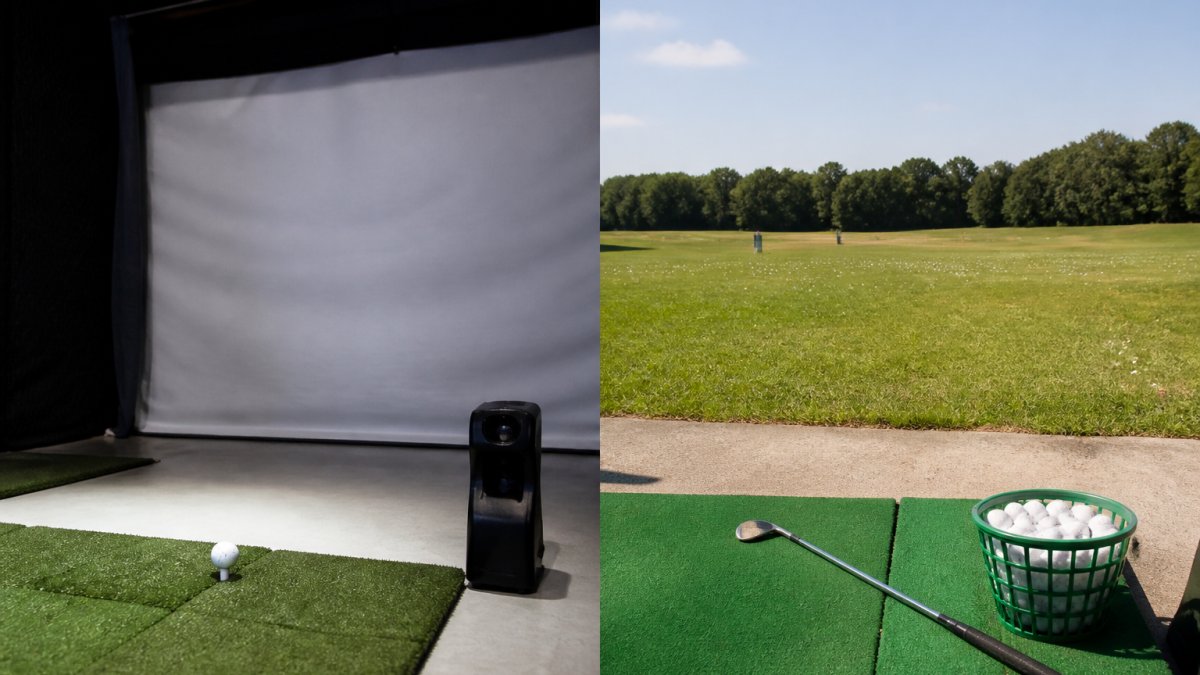
Table of Contents
- Indoor Golf vs Outdoor Range: The Core Differences
- How Golf Simulator Accuracy Compares to Real Ball Flight
- Year-Round Golf Training in Wyoming MI: Why Weather Changes the Equation
- Pros and Cons of an Outdoor Driving Range
- Pros and Cons of Indoor Golf Simulators
- Cost, Convenience, and Access: What to Weigh Before You Commit
- Frequently Asked Questions
Last Updated: September 29, 2026
Indoor Golf vs Outdoor Range: The Core Differences
The choice between indoor golf versus outdoor range practice comes down to control. An indoor simulator gives you climate-controlled conditions, instant shot data, and no waiting. An outdoor range gives you real ball flight, natural turf, and wind you can feel. This guide from Open Tee Golf breaks down what each option actually delivers for golfers in Wyoming, MI, so you can decide where your practice time is best spent.
Indoor golf is practice or play conducted inside a facility using launch monitors and projection screens to simulate course conditions. An outdoor range is a traditional driving range where you hit real balls into an open field.
The core trade-off is simple: indoor setups trade natural elements for data and convenience, while outdoor ranges trade data for authentic conditions. Neither is universally better. The right pick depends on your goals, your schedule, and how you handle Michigan winters.
What You Get From Each Setup
Indoor facilities deliver measurable feedback on every swing. You see clubhead speed, ball speed, launch angle, and spin rate within seconds. Outdoor ranges give you the feel of real contact and the visual truth of ball flight, but no numbers unless you bring your own device.
| Factor | Indoor Simulator | Outdoor Range |
|---|---|---|
| Weather | Unaffected | Fully exposed |
| Shot data | Automatic, detailed | None or limited |
| Ball flight | Simulated on screen | Real, in open air |
| Access | Often 24/7 | Daylight and weather dependent |
| Waiting | None with private bays | Can require a stall line |
How Golf Simulator Accuracy Compares to Real Ball Flight
Modern golf simulator accuracy has closed much of the gap with outdoor conditions, but the two still measure different things. A launch monitor tracks the ball for a short distance, then a physics model projects the rest of the flight. That model is only as good as the data feeding it.
What the Data Measures and What It Misses
Simulators capture the numbers that matter most for swing improvement: club path, face angle, smash factor, and spin. What they cannot fully replicate is turf interaction, uneven lies, and the visual depth of a real fairway. A common mistake is treating simulator distance as identical to course distance. It is close, but wind, elevation, and turf firmness shift real-world results.
Year-Round Golf Training in Wyoming MI: Why Weather Changes the Equation
Year-round golf training in Wyoming MI is the strongest argument for indoor play. West Michigan winters shut down outdoor ranges for months, and even in season, rain and wind cancel sessions without warning. An indoor facility removes that uncertainty entirely.
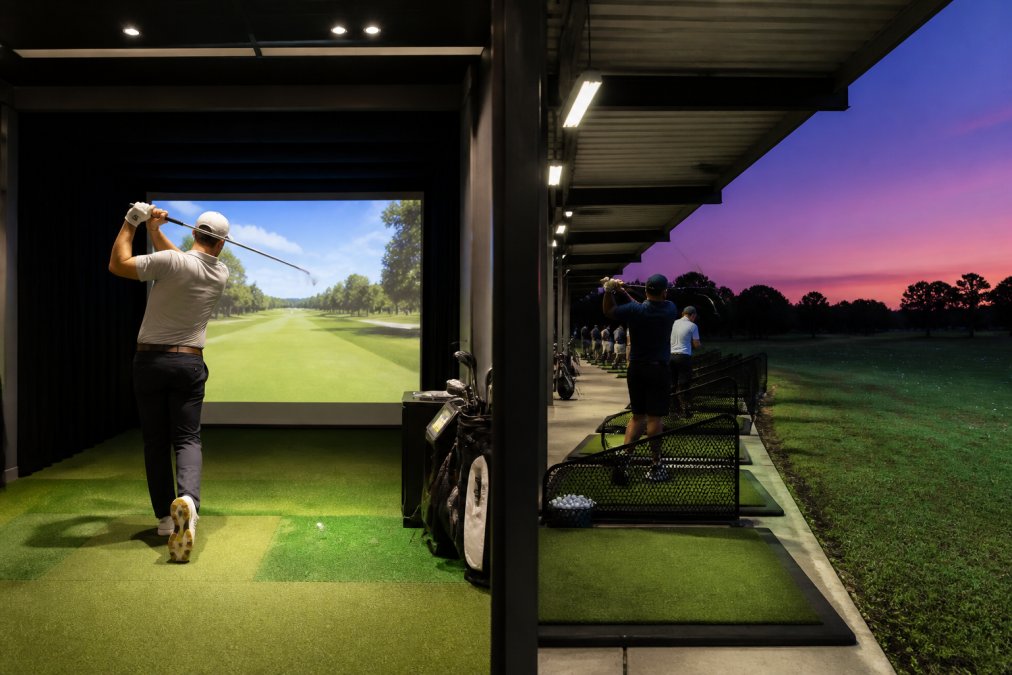
This is where Open Tee Golf changes the math for local golfers. The club offers 24/7 member access to private, climate-controlled bays equipped with Full Swing simulator technology. No tee times, no crowds, no waiting for a stall to open. For shift workers and busy professionals around Grand Rapids, that flexibility means practice fits around life instead of the other way around.
If you have searched for an indoor golf option "near me" and found only public simulator bars, the difference is privacy and access. You get your own bay, on your own schedule, with a system built for serious improvement.
Pros and Cons of an Outdoor Driving Range
An outdoor range remains the gold standard for one thing: real ball flight. You watch the actual trajectory, feel the wind push your fade, and see how the ball lands. No screen can fully copy that feedback.
Pros:
- Real ball flight and true turf contact
- Natural wind and weather conditions
- Usually lower cost per session
- Wide availability across West Michigan
Cons:
- Closed or unusable for much of the winter
- No automatic shot data
- Stalls fill up on weekends and evenings
- Limited to daylight hours at many facilities
The honest limitation: an outdoor range tells you what happened but rarely why. Without data, you are guessing at the fix.
Pros and Cons of Indoor Golf Simulators
Indoor simulators win on data, access, and consistency. Every swing produces measurable feedback, and the environment never changes unless you want it to.
Pros:
- Detailed shot data on every swing
- Available 24/7 in many facilities
- Weather never cancels a session
- Private bays suit groups and client entertainment
- Off-season training keeps your game sharp
Cons:
- Simulated ball flight is a model, not reality
- Turf interaction and uneven lies are limited
- Membership or session fees add up
- Quality varies widely between facilities
Cost, Convenience, and Access: What to Weigh Before You Commit
Pricing for indoor golf memberships depends on the facility, access level, and how often you plan to play, so check directly with providers for current rates rather than assuming a number. The real question is not cost alone. It is cost per useful session.
Weigh these factors before you decide:
- How often will you actually go? A 24/7 membership rewards frequent users far more than occasional ones.
- What does your schedule look like? Night-shift workers and parents get more value from flexible access.
- Do you want data or just reps? If you are chasing lower scores, measurable feedback matters.
- Will you host guests? Private bays change the experience for client entertainment and team building.
- How far is the drive? A 30-minute trip from Grand Rapids is worth it only if the facility removes the friction you hate.
For golfers who want precision data, private bays, and access at 2 AM, an indoor membership often pays for itself in sessions that an outdoor range could never offer.
The real challenge is not choosing between indoor and outdoor golf. It is finding practice that fits your schedule and actually improves your game. Open Tee Golf was built for exactly that, with 24/7 member access, Full Swing simulator technology, fully private bays, and climate-controlled year-round play in Wyoming, MI. Whether you want to sharpen your swing mechanics, host clients, or join a competitive league, the facility delivers a professional-grade experience on your terms. Become a member and start practicing when it works for you.
Frequently Asked Questions
Is indoor golf as effective as an outdoor driving range for improvement?
Indoor golf can be just as effective, and often more so for focused practice. Simulators give you instant data on club path, face angle, and ball speed after every shot, which outdoor ranges cannot provide without a launch monitor. The trade-off is that you are hitting into a screen rather than watching full ball flight. For mechanical work and swing changes, indoor wins. For reading wind and real turf interaction, the outdoor range still has value.
How does ball flight data in simulators compare to outdoor range ball flight?
Modern simulators use high-speed cameras and radar to measure club and ball movement at impact, then calculate the resulting flight. Golf simulator accuracy has improved to the point where carry distance and shot shape are close to what you see outside, though slight variations exist depending on the technology. The biggest difference is visual: outdoors you track the entire ball, indoors you watch a screen. The numbers behind the shot are what matter for improvement.
Can you practice year-round in Wyoming, MI using indoor golf facilities?
Yes. Year-round golf training in Wyoming MI is exactly why indoor facilities exist in this climate. Michigan winters make outdoor ranges unusable for months, and heated stalls only go so far when temperatures drop below freezing. A climate-controlled indoor bay lets you keep your swing sharp from November through March instead of losing feel and rebuilding your game every spring.
What is the cost difference between indoor golf memberships and outdoor range buckets?
Outdoor range buckets typically run $8 to $15 for 50 to 100 balls, so heavy practice adds up fast. Indoor memberships vary widely by facility and access level, and pricing depends on the specific club, hours, and amenities included. Rather than guess at numbers, check with the facility directly for current membership rates and what they include, like 24/7 access or guest privileges.